Learn or not: This is the eternal question

Learn or not: This is the eternal question

lunes, 4 de mayo de 2015

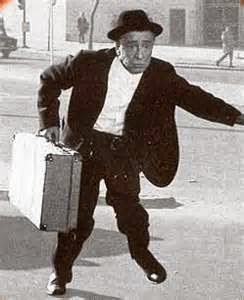
Super singer star: Nino Bravo


Nino Bravo's Biography
Early life
Ferri Llopis was born in Aielo de Malferit, Valencia, Spain. His father, Luis Manuel, a salesman, moved the family to Valencia, in search of better opportunities, when his son was three years old. Young Luis met, in 1958, bassist Vicente López, who introduced him to other Valencian musicians. Ferri Llopis discovered he could sing while on a trip with López and Ramón. López recalled that he was surprised, upon waking up from a nap, to hear him singing Domenico Modugno's hit "Libero". Deeply impressed, Lopez predicted that Ferri Llopis would become a superstar.
 

Meanwhile, Ferri Llopis took a job as a jeweler, also working for his mother, who owned a supermarket. At age 16 he became a fan of the famous Chilean singer Antonio Prieto, whose song, "La Novia" ("The Bride"), had become a number one hit in Spain. Bravo and his friends formed a band, "Los Hispánicos", and made a cover recording of "La Novia".
Singing

Bravo also enjoyed Rock & Roll music. He began singing at a hotel, where he sang his favorite English song, "Only You". Ferri Llopis was later approached by a recording company to sign with their label but he declined as the projected contract would not include the entire "Los Hispánicos" band. In 1964, "Los Hispánicos" changed their name to "Los Superson". They won a local radio contest, then moved on to Benidorm, where they became quite popular.

Ferri Llopis was soon after called up for military duty. Suffering from depression, he later contemplated quitting singing. While Ferri Llopis was away on military duty, his empresario López befriended Miguel Siurán, a radio personality, who was impressed by Los Superson's sound and wanted to help them get a recording contract. López declined as he felt Ferri Llopis should be included. When Ferri Llopis returned from his military service, López talked to him about the contract, but Siurán was initially doubtful, questioning the young man's singing ability, asking if he could sing like Tom Jones, Engelbert Humperdinck or John Rowles.
Siurán, however, became impressed with Ferri Llopis and took him to a music festival. Although Bravo did not win at the festival, Siurán became convinced that it was time for Bravo to become a star; soon afterwards, Siurán came up with the artistic name of Nino Bravo. Bravo and Siurán first tried unsuccessfully to get a contract with RCA. They then went to Fonogram, in Madrid. Bravo and Siurán returned to Valencia, where Siurán published a newspaper ad announcing "Nino Bravo y Los Superson". Shortly thereafter, Fonogram called to offer a contract for an album with the band. In March 1969, shortly after their album hit the market, Bravo sang before a live audience for the first time. After the concert, frenzied admirers tore down Bravo's concert posters. Marriage

On 20 April 1970, he married María del Ámparo Martínez Gil and their first daughter, María del Ámparo Ferri Martínez, was born in 1972. They would have a second daughter, Eva, born after her father's death. Fonogram wanted Bravo to go solo; in 1970, Siurán was replaced by José Meri as Bravo's manager.
Fame

In 1970, Bravo participated for the first time in the prestigious Barcelona Music Festival. He would not gain international acclaim until two festivals later, however. After Bravo received favorable reviews from a festival audience in Athens, Greece, he went on to impress festival goers at the Rio de Janeiro Festival. After being exposed to international audiences in Europe and Latin America, Bravo and Meri parted ways, and Bravo took on a new manager. His first solo album was soon released, and the song "Te quiero, te quiero", by the composer Augusto Algueró, became an international hit, which is now considered a classic by many Hispanic music critics. Bravo's first album, "Tu Cambiarás" ("You Will Change"), sold well, particularly in Colombia. Bravo later went on tour in Colombia and Brazil, where he participated, for a second time in the Rio de Janeiro Festival. In 1971, Bravo recorded his second album, later posthumously released in CD format as "Puerta de amor" ("Love's Door").
 

Third album

In 1972, Bravo released a third album, "Libre" ("Free"), which was a huge success and a very controversial one for Bravo, as many Latin American dictators of the time banned the album due to its title. including Fidel Castro. Bravo was also banned from singing in certain countries. 

He nonetheless became widely known in Argentina, Chile, Mexico, Ecuador, Puerto Rico, Venezuela, the Dominican Republic, Peru, and among the Hispanic population of the United States.

A song that he released in 1973, "Un beso y una flor" ("A Kiss and a Flower") became one of Bravo's greatest international hits.(Loosely translated, the song's chorus was "in departure, a kiss and a flower"). On 14 March 1973, Bravo performed his last concert, before his Valencia fans.

Death

On 16 April 1973, Bravo was driving his BMW 2800 along with the Humo duo and Miguel Diurni when his car was involved in an accident about 100 km southeast of Madrid.
  
He died on route to the hospital from his injuries, aged 28. He had just signed a five year record deal with the European record label Polydor.


domingo, 3 de mayo de 2015

In Life there are two kinds of people


Quote of the day/frase del day

SPANISH:"Te voy a meter tal hostia, que los de CSI van a tener que hacer horas extra para poder reconocer tu cadaver"

ENGLISH: "I'm gonna hit you so hard that the CSI cops will have to work overtime to recognize/check up your corpse"

My cousin Jorge, a typical aragonese

One of my super heroes: Nino Bravo

Nino Bravo: "Noelia"
https://www.youtube.com/watch?v=EHklIo7yUkU
Spanish:
Hay una chica que es igual
pero distinta a las demás.
La veo todas las noches
por la playa pasear
y no se de dónde viene
y no se a dónde va.

Hace tiempo que sueño con ella
y sólo sé que se llama Noelia.
Hace tiempo que vivo por ella
y sólo sé que se llama Noe...li...a...,
Noelia, Noelia, Noelia, Noelia, Noelia,
Noelia, Noelia, Noelia, Noelia, Noelia.

Yo quiero hablarle de mi amor
pero ella da la espalda y se va.
Parece que
me va a llamar
y luego huye sin hablar.

Hace tiempo que sueño con ella
y sólo sé que se llama Noelia.
Hace tiempo que vivo por ella
y sólo sé que se llama Noe...lia,
Noelia, Noelia, Noelia, Noelia, Noelia,
Noelia, Noelia, Noelia, Noelia, Noelia.

Hace tiempo que no he vuelto a verla
y no sé que será de Noelia.
Por la noche la busco en la playa
y en silencio yo grito
¡Noe...li...a...!
Noelia, Noelia, Noelia, Noelia, Noelia,
Noelia, Noelia, Noelia, Noelia, Noelia.

No sé que hará
ni si vendrá
más yo la espe...ro...
 
English
There is a girl who is common
But she differs from the rest.
I see her every nights
Walking along the beach
I don’t know where does she come from...
And I don’t know where does she go to.

Since long I dream with her
And I just know that her name’s Noelia,
Since long I live for her
And I just know that her name’s Noelia.

Noelia, Noelia, Noelia,
Noelia, Noelia,
Noelia, Noelia, Noelia,
Noelia, Noelia.

I want to talk to her about my love
But she turns her back and goes.
It looks like she’ll ring me up
And then listens without talking.

Since long I dream with her
And I just know that her name’s Noelia,
Since long I live for her
And I just know that her name’s Noelia.

Noelia, Noelia, Noelia,
Noelia, Noelia,
Noelia, Noelia, Noelia,
Noelia, Noelia.

Since long I haven’t seen her again
And I don’t know yet what will happen to Noelia,
I look for her on the beach at night
An in silence I cry: Noelia

Noelia, Noelia, Noelia,
Noelia, Noelia,
Noelia, Noelia, Noelia,
Noelia, Noelia.

I don’t know what will she do, nor if she comes.
More I wait for her

Enjoy it!!

sábado, 2 de mayo de 2015

Music for all: Ellie Goulding "Burn"

https://www.youtube.com/watch?v=CGyEd0aKWZE

English:
We, we don't have to worry bout nothing
'Cause we got the fire, and we're burning one hell of a something
They, they gonna see us from outer space, outer space
Light it up, like we're the stars of the human race, human race

When the lights turned down, they don't know what they heard
Strike the match, play it loud, giving love to the world
We'll be raising our hands, shining up to the sky
'Cause we got the fire, fire, fire, yeah we got the fire fire fire

And we gonna let it burn burn burn burn
We gonna let it burn burn burn burn
Gonna let it burn burn burn burn
We gonna let it burn burn burn burn

We don't wanna leave, no, we just gonna be right now
And what we see, is everybody's on the floor
Acting crazy getting loco to the lights out
Music's on, I'm waking up, we stop the vibe, and we bump it up
And it's over now, we got the love, there's no secret now, no secret now

When the lights turned down, they don't know what they heard
Strike the match, play it loud, giving love to the world
We'll be raising our hands, shining up to the sky
'Cause we got the fire, fire, fire, yeah we got the fire fire fire

And we gonna let it burn burn burn burn
We gonna let it burn burn burn burn
Gonna let it burn burn burn burn
We gonna let it burn burn burn burn

When the lights turned down, they don't know what they heard
Strike the match, play it loud, giving love to the world

We gonna let it burn burn burn burn
Burn burn burn burn

We can light it up up up
So they can put it out out out
We can light it up up up
So they can put it out out out
We can light it up up up
So they can put it out out out
We can light it up up up
So they can put it out out out

When the lights turned down, they don't know what they heard
Strike the match, play it loud, giving love to the world
We'll be raising our hands, shining up to the sky
'Cause we got the fire, fire, fire, yeah we got the fire fire fire

And we gonna let it burn burn burn burn
We gonna let it burn burn burn burn
Gonna let it burn burn burn burn
We gonna let it burn burn burn burn

When the lights turned down, they don't know what they heard
Strike the match, play it loud, giving love to the world
We'll be raising our hands, shining up to the sky
'Cause we got the fire, fire, fire, yeah we got the fire fire fire.And we gonna let it burn


Spanish:
 Nosotros, nosotros no tenemos que preocuparnos por nada,
porque tenemos el fuego,
y estamos ardiendo, algo tremendo de un no sé qué (one hell).
Ellos, ellos van a vernos desde el espacio, el espacio,
enciéndelo, como si fuéramos estrellas de la raza humana,
raza humana.

Cuando la luz está apagada,
no saben lo que escuchan,
enciende la cerilla, tócalo bien alto,
dando amor al mundo,
estaremos levantando las manos,
brillando hacia el cielo,
porque tenemos el fuego, fuego, fuego,
sí, tenemos el fuego, fuego, fuego.

Y vamos a dejar que arda, que arda, que arda,
vamos a dejar que arda, que arda, que arda,
vamos a dejar que arda, que arda, que arda.

No queremos marcharnos, no,
ahora mismo solo queremos estar,
y lo que vemos, es a todo el mundo en el suelo,
comportándose alocadamente,
volviéndose acechadores por el apagón (lurker).
La música está encendida, yo me estoy despertando,
paramos el ambiente y lo incrementamos (vibe),
y ahora se ha terminado, tenemos el amor,
ahora no hay secreto, ahora no hay secreto.

Cuando la luz está apagada,
no saben lo que escuchan,
enciende la cerilla, tócalo bien alto,
dando amor al mundo,
estaremos levantando las manos,
brillando hacia el cielo,
porque tenemos el fuego, fuego, fuego,
sí, tenemos el fuego, fuego, fuego.

Y vamos a dejar que arda, que arda, que arda,
vamos a dejar que arda, que arda, que arda,
vamos a dejar que arda, que arda, que arda.

Cuando la luz está apagada,
no saben lo que escuchan,
enciende la cerilla, tócalo bien alto,
dando amor al mundo.

Vamos a dejar que arda, que arda, que arda,
que arda, que arda, que arda.

Podemos iluminarlo, iluminarlo, iluminarlo,
para que así ellos no puedan apagarlo, apagarlo, apagarlo.
Podemos iluminarlo, iluminarlo, iluminarlo,
para que así ellos no puedan apagarlo, apagarlo, apagarlo.
Podemos iluminarlo, iluminarlo, iluminarlo,
para que así ellos no puedan apagarlo, apagarlo, apagarlo.
Podemos iluminarlo, iluminarlo, iluminarlo,
para que así ellos no puedan apagarlo, apagarlo, apagarlo.

Cuando la luz está apagada,
no saben lo que escuchan,
enciende la cerilla, tócalo bien alto,
dando amor al mundo,
estaremos levantando las manos,
brillando hacia el cielo,
porque tenemos el fuego, fuego, fuego,
sí, tenemos el fuego, fuego, fuego.

Y vamos a dejar que arda, que arda, que arda,
vamos a dejar que arda, que arda, que arda,
vamos a dejar que arda, que arda, que arda.

Cuando la luz está apagada,
no saben lo que escuchan,
enciende la cerilla, tócalo bien alto,
dando amor al mundo,
estaremos levantando las manos,
brillando hacia el cielo,
porque tenemos el fuego, fuego, fuego,
sí, tenemos el fuego, fuego, fuego.

Y vamos a dejar que arda.

Advanced: Should have, Could have and would have

The general rule of Should, Could, and Would is:
  • Should for recommendation / advice “If you want to lose weight, you should eat healthy food.”

  • Could for possibilities “I have the day off tomorrow.” “Great! We could spend the day at the beach. Or we could go shopping.”


  • Would for imagining results “If I were rich, I would buy a boat.”

Click here to review the difference between should, could, and would.
The same general rule applies when using should have, could have, and would have for imaginary past situations.

Should Have

Use should have to say that a different action was recommended in the past.
If you arrive late to English class, you can say:
“I should have left my house earlier.”
If you regret an argument, you can say:
“I shouldn’t have yelled at you yesterday. I’m sorry.”
You can also use should have / shouldn’t have to tell other people that a different action in the past would have been better. If your son fails a test, you can say:
“You should have studied. You shouldn’t have played video games all weekend.”

Could Have

Use could have to talk about possibilities if something had been different in the past.
For example, someone who didn’t go to college can say:
“If I had gone to college, I could have gotten a better job.”
When talking about a gymnast who didn’t win a competition, you can say:
“She could have won the gold medal if she hadn’t fallen three times.”
Could have is often used with “if + had + past participle” (If I had gone / if she hadn’t fallen) – these “if” phrases express the imaginary past situation. However, in some cases you can use could have without the “if” phrase. Imagine you’re driving with a person who makes a dangerous maneuver on the road. You can say:
“Are you crazy? We could have gotten into an accident.”

Would Have

Use would have to imagine a result (if something had been different in the past):
If you arrive late at the airport and miss your flight, you can say:
“If we had arrived earlier, we would have caught our flight.”
If you forget your umbrella, and it starts to rain, and you get wet, you can say:
“If I had brought my umbrella, I wouldn’t have gotten wet in the rain.”
Would have expresses more certainty about the result than could have:
“If I had worked harder, I could have gotten a promotion.” (maybe I’d get a promotion… but maybe not)
On a test where you need 70% to pass:
“I got a 68 on the test. If I had gotten two more points, I would have passed.”
(with the two points, passing the test is CERTAIN)

Spoken English

In spoken English, many people say should’ve, could’ve, and would’ve.

Should, Could and Would: The wonderful world of modals

Use SHOULD and SHOULDN’T for advice

Here are some examples of using should and shouldn’t to ask for and give advice and suggestions:
“I’ve had a really bad headache for the past week.”
“That’s not good – you should go to the doctor.”
“I want to make more friends, but I don’t know how.”
“First of all, you shouldn’t spend so much time on the computer. You should go out and join a club or start playing a sport instead!”
“I had a fight with my best friend. What should I do?”
“Hmm… I think you should call her and tell her you’re sorry.”

Use COULD and COULDN’T for ability in the past

Could and couldn’t are the past forms of can and can’t:
When I was younger, I could run a mile in 7 minutes. Now it takes me 20 minutes!
Yesterday, I couldn’t find my wallet anywhere – but this morning I found it.
Last year, he couldn’t speak English very well, but now he can.

Use COULD for possibilities in the future

Here’s an example of could to talk about future possibilities:
“Do you have any ideas for our publicity campaign?”
“Yes, I’ve got a few ideas. I could put advertisements on Facebook and Google. We could also give out pamphlets in our neighborhood. Maybe John could even contact local TV stations.”

Use COULD to make polite requests

  • Could you please open the window? It’s hot in here.
  • Could you turn the music down? Thanks.
  • Could you make 10 copies of this report, please?

Use WOULD to talk about unreal or unlikely situations

  • If I were the president of my company, I would make a lot of changes.
  • If people were more generous, there wouldn’t be so much poverty in the world today.
  • She would travel around the world if she had more vacation time.
Note: In this case, would is often shortened to ‘d
  • If I were the president of my company, I’d make a lot of changes.

Use WOULD YOU LIKE to make polite offers

Here are some examples of using would you like…? to make polite offers:
“Would you like anything to drink?”
“A soda would be great. Thanks!”
“Would you like to join us for dinner?”
“I’d love to, but I actually have other plans tonight.”
“Would you like to see some pictures from my vacation?”
“Sure!”
Don’t use “to” after should, could, and would:
You shouldn’t to smoke.
You shouldn’t smoke.
We could to order pizza tonight.
We could order pizza tonight.
I would to buy a new car if I had the money.
I would buy a new car if I had the money.

Traductor de Google